Learn about AI and NoCode. Curated news, tutorials and interviews every week. Deep dives on how to build with AI and NoCode tools.
Share
🔥 Our honest look back on 2025
Published about 2 months ago • 7 min read
Create something today with AI & Visual Development ✨
Hello and happy Tuesday, Thursday! 😰
As we near the end of 2025 and overwhelm sets in with all our unmet goals; we've decided to make this issue something of a personal retrospective on the past year.
Make a brew and let’s jump in… 🫖
🔎 Preview: In today's issue
😶🌫️ Kieran's view on vibe coding is changing
🤔 Matt's thoughts on AI agents
📺 James's hot takes from Asia
It's been quite a year for changes in the AI landscape and at times I've felt paralysed by all the shiny objects and feeling of being left behind.
Here are some things I've realised...
I’m a laggard and that's okay
I’m slow to try new tools. Always have been.
Keeping up with every new model, framework, or AI product feels impossible, so I’ve mostly stopped trying. I don’t consume much “latest AI news” content anymore. Instead, I wait for the dust to settle.
My rule of thumb is simple:
If people I trust are still using the same tool or model six months later, then I’ll pay attention. Most things don’t survive that long. The ones that do are usually worth learning.
This approach has saved my sanity and, ironically, led me to better tools.
Recommendation:
Pick two or three people whose judgement you trust and copy their tool choices with a six month delay. You will miss very little and waste far less time.
My view on vibe coding is evolving
For a long time, I was sceptical of vibe coding.
Early attempts felt fragile and frustrating. Things broke easily. Debugging felt opaque. I didn’t trust what was happening under the hood.
That’s started to change.
Over the past couple of weeks, I’ve been experimenting with Claude Code, and it’s shifted my perspective more than I expected. It just works. And it opens up a new world of building possibilities.
One of the first things I built with Claude Code was this tool which turns boring screenshots into short animated videos... a fun and simple project!
More importantly, it unlocked a new realisation: I don’t just enjoy building apps. I enjoy product managing an AI to build apps for me.
That’s a different skill entirely, and one I find surprisingly satisfying.
Recommendation:
If you have written off vibe coding, revisit it with a single focused project. Treat the AI like a junior developer that needs clear instructions, not like magic.
AI is best when it's teaching you
I’ve settled into a workflow where I pair coding agents with a separate AI chatbot.
Claude builds and Gemini teaches me (I use Gemini because I like the way it writes, but use whatever model you prefer).
I use it like a personal tutor and ask relentlessly basic questions about what I’m seeing. I look at the output and try to understand why it exists and what problem it solves.
Give the AI context so it explain things in a way you'll understand. Mine gives me Bubble analogies for everything.
I don’t want to write the code myself. It’s still extremely complex. But I do want to understand the moving parts of the systems I’m creating.
Recommendation:
Use one AI to do the work and a different one to explain it to you. Ask naive questions on purpose. Ask it to give you analogies related to something you understand well.
The opportunities are real
It’s an incredibly exciting time to be AI and software literate.
I constantly hear real stories, not hype, of people in non-technical roles spotting a problem, building software to solve it, and eventually leaving their jobs to run that business.
This isn’t easy. Most attempts still fail. But the gap between idea and working software has never been smaller, and it’s shrinking fast.
Importantly, the more removed your job is from the world of AI and new technology, the more opportunities there are. Software companies are drowning in tools already. Trades, local government, healthcare, legal services, hospitality... this is where software can really make a difference.
If you have a problem you complain about regularly at work, try building a tiny internal tool to solve just that one thing. Real leverage starts small.
My favourite AI agent
...is beautifully simple and real-life.
It helps me to stay on top of all the dates I need to remember for my kids' school.
It's a Zapier agent that:
Triggers when I label an email in my Gmail account with a calendar agent label
Reads the email and extracts events I need on my calendar
Checks to see if they're already on my calendar
Adds them if they're not there and sends me a confirmation message
It honestly saves me a lot of annoying admin!
Recommendation:
Find small but annoying admin things you do in your personal life. Build a Zapier agent (it's very easy, just like writing an email) to fix it.
✅Thanks for being an active Create With Member
Access your member perks, exclusive content and office hours.
I've been head down teaching Agents and Automation over the past months. Here's some questions I've been posed that I thought were great!
How to decide what to build?
When you start, you want to build the clever thing. But the agents people actually use daily? They're boring.
My advice
1) start with your calendar and try to find a repetitive thing you do...then think what do i need to prep for this. 2) Go to the templates page of the tool you are using. 3) For more fun, browse Apify and think of interesting data sources you could use.
An example templates page from n8n
Either way, think about your personal productivity first.
For example, my most-used agent is a 'chief of staff'. Nothing fancy. It reviews my day each morning and surfaces what matters from Calendar, Gmail Notion and Slack. It saves me 15 minutes of context-switching and triggers me with some actions to take.
That's it. But I use it every single day, which is more than I can say for the elaborate systems I've built and abandoned.
My chief of staff agent in n8n
The pattern: build for frequency, not complexity.
Architecting agents
There's no exact science here, but the principle that works is the same one that works in all software development: break things into logical components.
For agents, think in roles. A researcher. A drafter. An editor. Each with a clear job.
Yes, the models are getting powerful enough to handle enormous prompts and reason through them. But control matters. When something breaks (and it will), you want to know which component failed. When you want to improve output quality, you want to tweak one role, not untangle a monolithic prompt.
Separation of concerns isn't just good engineering. It's good debugging.
Keeping up with tools
Someone asked how to stay on top of all the new tools launching. Honest answer: even I struggle, and tracking this space is literally my job.
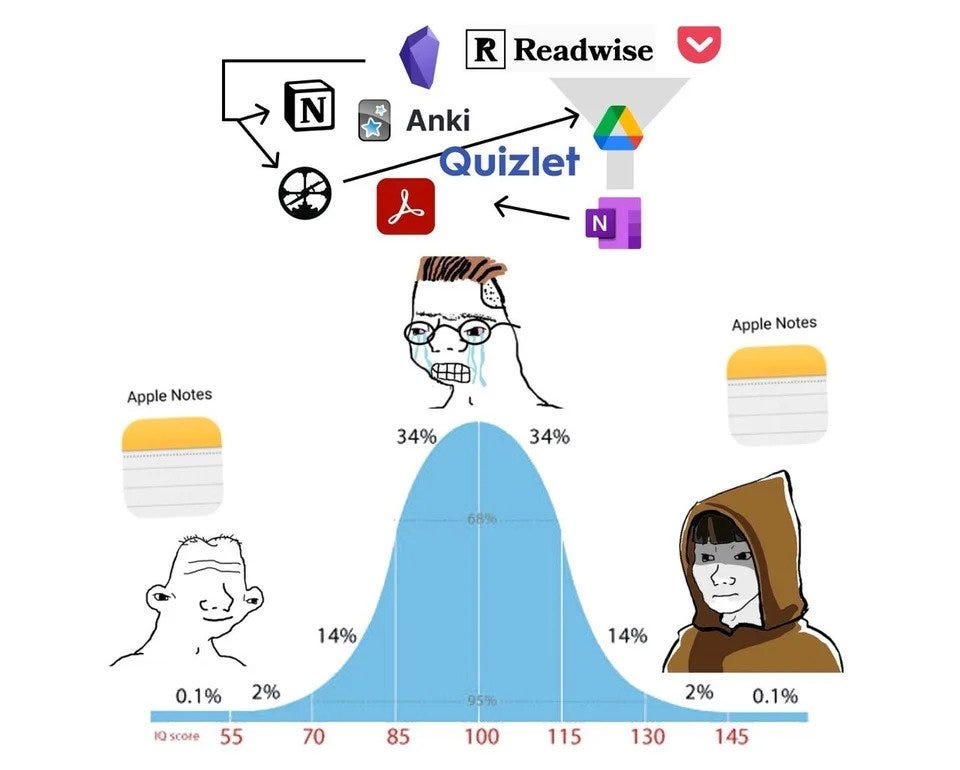
Yesterday I went back to Apple Notes for my task list. I'd built an elaborate system in Notion with an AI project manager handling tasks, updates, the lot. It worked. But the cognitive overhead of maintaining it outweighed the benefit.
Sometimes the right tool is the boring one you already know.
The meta-lesson: don't confuse experimenting with tools for actual productivity. They're different activities. Schedule time for exploration, but don't let it colonise your actual work.
What happens when you combine walking robots, limitless demand for intelligence, and a region hungry for technological change? You get a front-row seat to the future of AI in Asia.
Live from AIMX Singapore, host Seng Woei Yuan sat down with James. Fresh from hosting their first Asia event in Bangkok, James shares his observations on what makes this region different. In this episode, they discuss:
Why the "AI bubble" narrative doesn't apply to Asia
The surprising presence of embodied AI and robotics at AIMX Singapore
Asia's energy advantage and openness to change
A prediction: AI supercomputers in space, powered by solar
Why traditional apps and operating systems may be on their way out
The massive opportunity for AI adoption across Southeast Asian enterprises
Whether you're building, investing, or just curious about where AI is heading – this conversation offers a refreshingly optimistic take from someone who's seen both sides of the world.
Click here to help us to keep the lights on and become one of our sponsors. We have a consistent CTR of over 40% and an audience of tinkerers, builders and pros.
🧠 Tiny AI Tip
A friendly, clear and firm tones yield better, more direct results
❌ Fix the grammar in this. NOW.
Aggressive tones can lead to overly cautious, pre-canned, or less helpful responses as the model tries to de-escalate. Politeness can sometimes result in chatty, less direct answers.
✅ Please review the following text for grammatical errors and suggest corrections. My goal is to make it sound more professional and confident
This is direct, respectful, and provides context ("goal is to make it sound more professional"). (Greg Isenberg)
🔊 On your radar
Keep your finger on the pulse of what we think is hot in the space right now 🔥
👉 Why it matters: You can drag and drop elements on your live site, tweak props and styles, and describe changes by pointing and typing. The agent then updates the actual code for you. It's getting close to a Figma (even Bubble.io) approach.
👉 Why it matters: The latest model handles long documents far better, spots issues in screenshots, and can generate real Excel files with formulas. For you, that means faster audits of PDFs, cleaner dashboard reviews, and working spreadsheets without manual setup.
👉 Why it matters: If you use n8n, Chat Hub gives your team a simple chat window to run workflow agents without exposing the workflows themselves. You can set “chat only” users, plug in multiple AI models, and keep costs and access under one roof. It’s in beta, so expect changes, but looks very interesting.
Create something today with AI & Visual Development ✨ Hello and happy Tuesday! We have big news! Our flagship conference is coming back in 2026 and early-bird tickets are on sale NOW. Let’s jump in… 🔎 Preview: In today's issue 🤔 Agentic workflows inside Notion 📺 From coffee chaos to automation pro 🐒 AI in the wild: real‑world uses ✅ Thanks for being an active Create With Member Access your member perks, exclusive content and office hours. Go to Dashboard 🚨 BIG NEWS... Create With 2026 tickets...
Create something today with AI & Visual Development ✨ Hello and happy Tuesday! Happy thanksgiving (this Thursday) for our American friends. As part of our mission to educate more people about AI, we’ve got a deep dive on Google's newly released Nano Banana Pro...bottom line...it's Pro. Also... keep your eye out for a big announcement from us in the next few days! Let’s jump in… 🔎 Preview: In today's issue 🤔 Google Gemini Nano Banana Pro explained 📺 THIS is what an AI power-user looks like 🔥...
Create something today with AI & Visual Development ✨ Hello, happy Tuesday and hope you've recovered after the global Cloudflare outage! ☠️ As part of our mission to educate more people about AI, we’ve got a deep dive and a standout story on going from a corporate job to profitable SaaS. Before we jump straight in, big news: Due to popular demand we've launched a Slack workspace for Create With Members! It’s the place to swap ideas, get help fast, and level up together on all things AI. When...